 LinguaVox
 ISO 9001
 ISO 17100
 ISO 18587
The effect of a different language
Languages expand and contract differently. Font choice, line breaks and punctuation also affect how a page reads. Right-to-left scripts require more than reversing a text box: figures, Latin-script product names and numbers need careful placement. If Arabic or another such language is involved, a sample of the actual design helps us assess the necessary adaptation rather than assume that the original layout can simply be mirrored.
The output's purpose matters. A PDF intended for on-screen reading may have different production specifications from artwork supplied to a printer. Tell us who will produce the final piece and provide their requirements. We should not quietly remove approved information to force a paragraph into a box. If space is genuinely insufficient, layout changes or an agreed linguistic reformulation should be discussed with the person approving the content.
Material with diagrams and tables
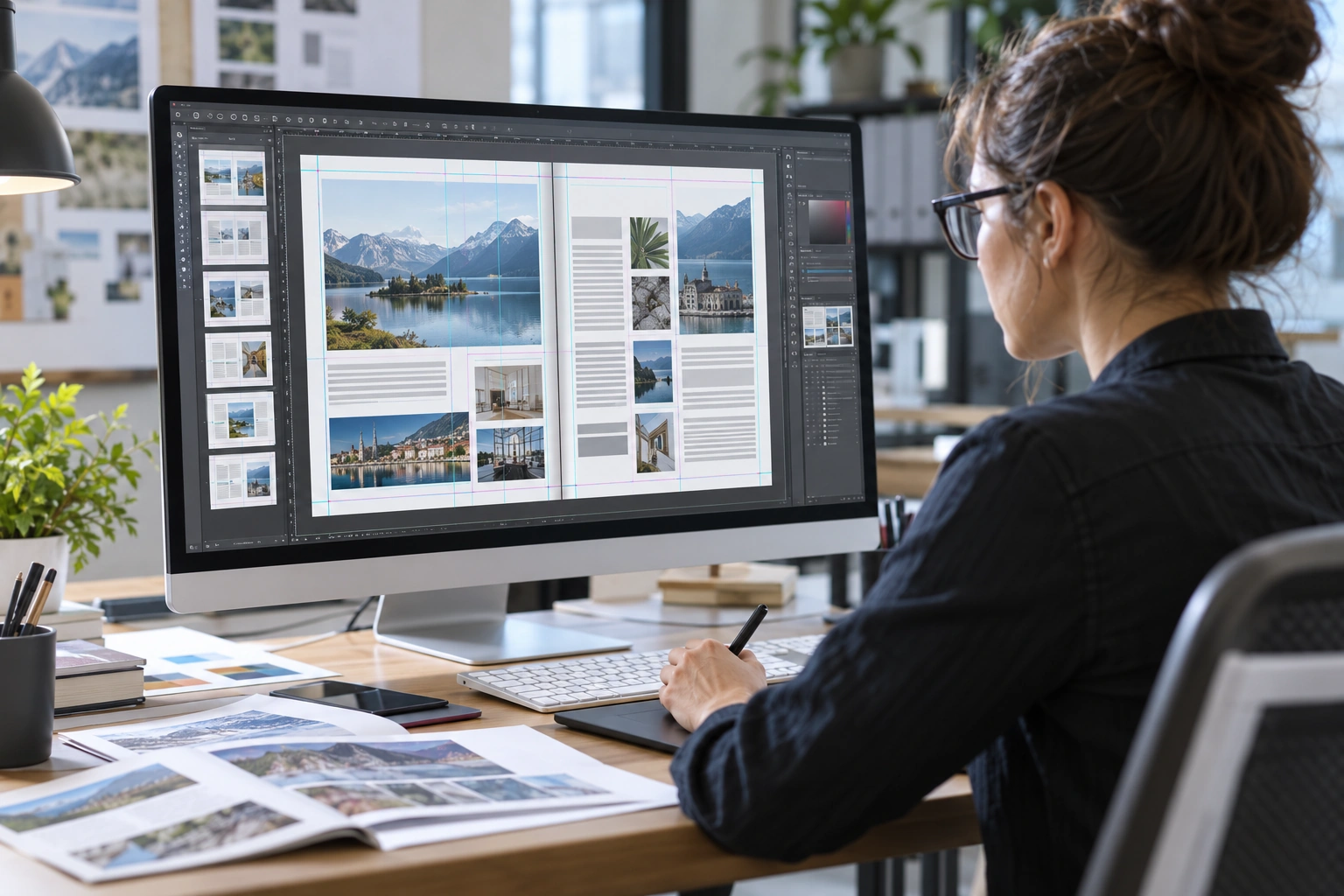
Catalogues, product sheets, presentations, illustrated manuals and annual reports may all require typesetting. In a technical manual, each warning needs to remain close to its relevant step or figure. In a financial report, notes must remain connected to the corresponding figures and tables. Layout is part of the document's usability, although it does not replace linguistic review.

Website and app interfaces follow another workflow. Website and software localisation checks text as it appears in live screen layouts. A downloadable catalogue attached to a website may need DTP, while the interface itself needs product-context checks. The distinction helps us estimate the actual work rather than charge for an unsuitable process.
Source files and reconstruction
Editable design files allow text to be changed while retaining styles, image links and layers. If you have only a PDF, we must assess whether its text can be extracted and how much reconstruction is required. Labels embedded in images may need separate graphics work. Provide fonts and other project resources that your organisation is entitled to share when they are necessary to open the design correctly.
Agree whether you need editable files, review PDFs or final output prepared to your print supplier's specifications. The number of review rounds should also be clear. When corrections arrive in several languages, one consolidated feedback file per language reduces the risk of reintroducing text that was rejected in an earlier version.
QR codes, hyperlinks and page references should be checked in the finished document too. A language change can alter pagination and leave an internal reference pointing to the wrong page. Tell us which elements must remain identical across versions and which URLs or contact details are specific to each market.

Visual and linguistic checks
After the translation is placed, we inspect overflow, clipped content, tables, numbering, references and the relationship between captions and images. Bilingual translation review compares the words with the source; visual checking establishes whether the delivered design shows them completely. Both can be planned together, but neither substitutes for the other.
Target markets can introduce different scripts, punctuation and local conventions. Our languages section helps define the variants. our quality approach explains why the final delivered file deserves attention, not just the text document sent to the designer beforehand.
Quotation and scheduling
Send a sample and the full design set, the number of pages and languages, and the intended use. If the translation has not yet been prepared, we can assess the language and layout stages separately. Timing depends on design complexity, access to editable files and the agreed review rounds. Browse the wider translation services or send the material through the quote form.
Frequently asked questions
Can you work from a PDF alone?
We can assess it, but missing editable files may require page or graphic reconstruction. That can affect price and schedule. Send the PDF and explain which file format you need at the end.
What if the translated text does not fit?
A layout adjustment or agreed reformulation may solve the problem. Important information should not simply be removed to save space. The final choice should be approved by the person responsible for the content.
Can you typeset right-to-left languages?
The files, fonts and interaction with other elements need to be assessed for each project. Reading direction affects tables and graphics as well as paragraphs. A sample helps determine the work required.
Can I receive editable files?
That can be agreed when the source files and necessary resources are available. Tell us which design application and version your team will use. The output format should be part of the quotation.
Does DTP include checking the translation?
Visual checking and bilingual review are separate tasks. Both can be included if we have the original and agree the scope. A page that fits does not prove that the text conveys the source accurately.